Day Three of Carers Week 2023
What are your rights?
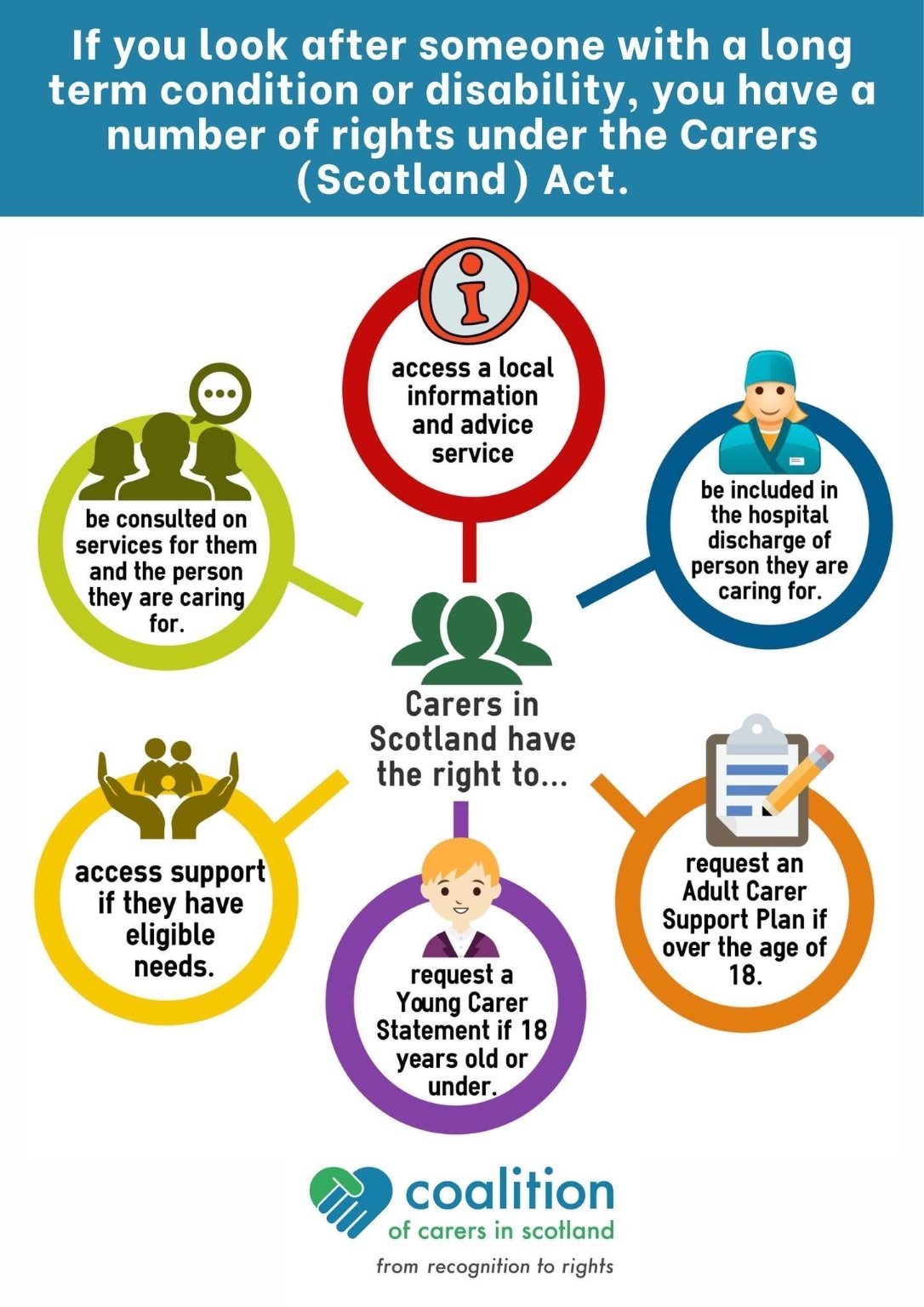
If you look after someone with a long term condition or disability, you have a number of rights under the Carers (Scotland) Act.
Please click HERE to view your rights under the Carers (Scotland) Act.
Do you want to take part in Shared Care Scotland's short information event on Short Breaks?
As part of their Carers Week activity, Shared Care Scotland is hosting a short information event on short breaks for carers.
They will show carers how to use their website to help plan, fund and find their next break, and share resources and tips too. There will also be plenty of time to ask anything and everything about short breaks in their question and answer session. The event is free and will take place online.
Register for the event today and they will send out a link and details on how to join.
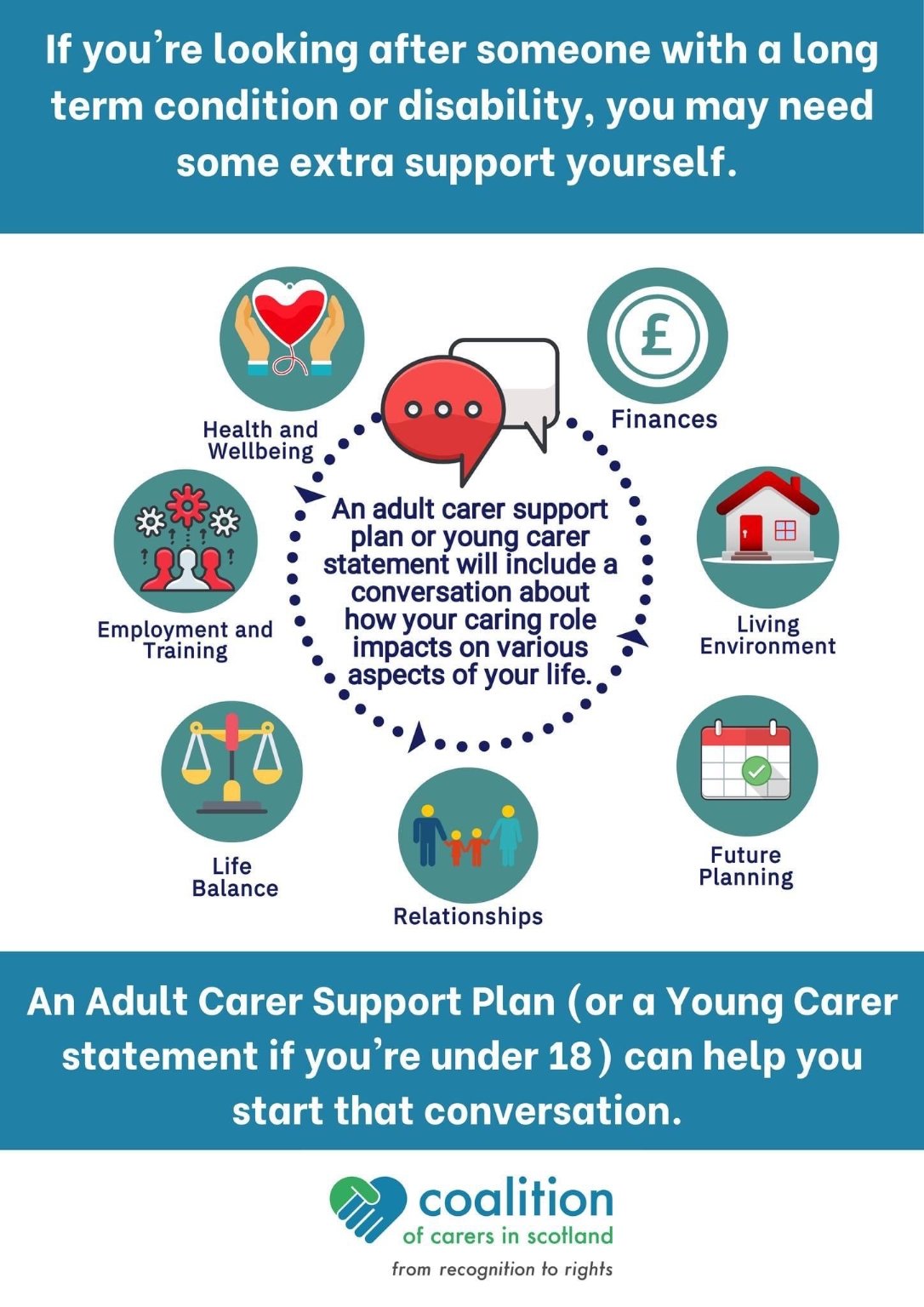
The right to request an Adult Carer Support Plan / Young Carer Statement
All unpaid carers in Scotland have the right to request an Adult Carer Support Plan (or a Young Carer Statement if under 18)
The local authority must offer an adult carer support plan to anyone they identify as an adult carer. They must prepare an adult carer support plan for anyone who accepts this offer. They must also prepare an adult carer support plan for anyone who meets the definition of an adult carer if that person requests one.
The local authority must offer a young carer statement to anyone they identify as a young carer. They must prepare a young carer statement for anyone who accepts this offer. They must also prepare a young carer statement for anyone who meets the definition of young carer if the young carer requests one.
For further information please click HERE.
The right to take unpaid leave from work to care for family or friends
Did you know that on 24th May 2023, the Carer's Leave Bill received Royal Ascent meaning it will become law?
The Carer's Leave Act 2023 will give employees the right to take unpaid leave from work to care for family or friends.
For further information, please click HERE.
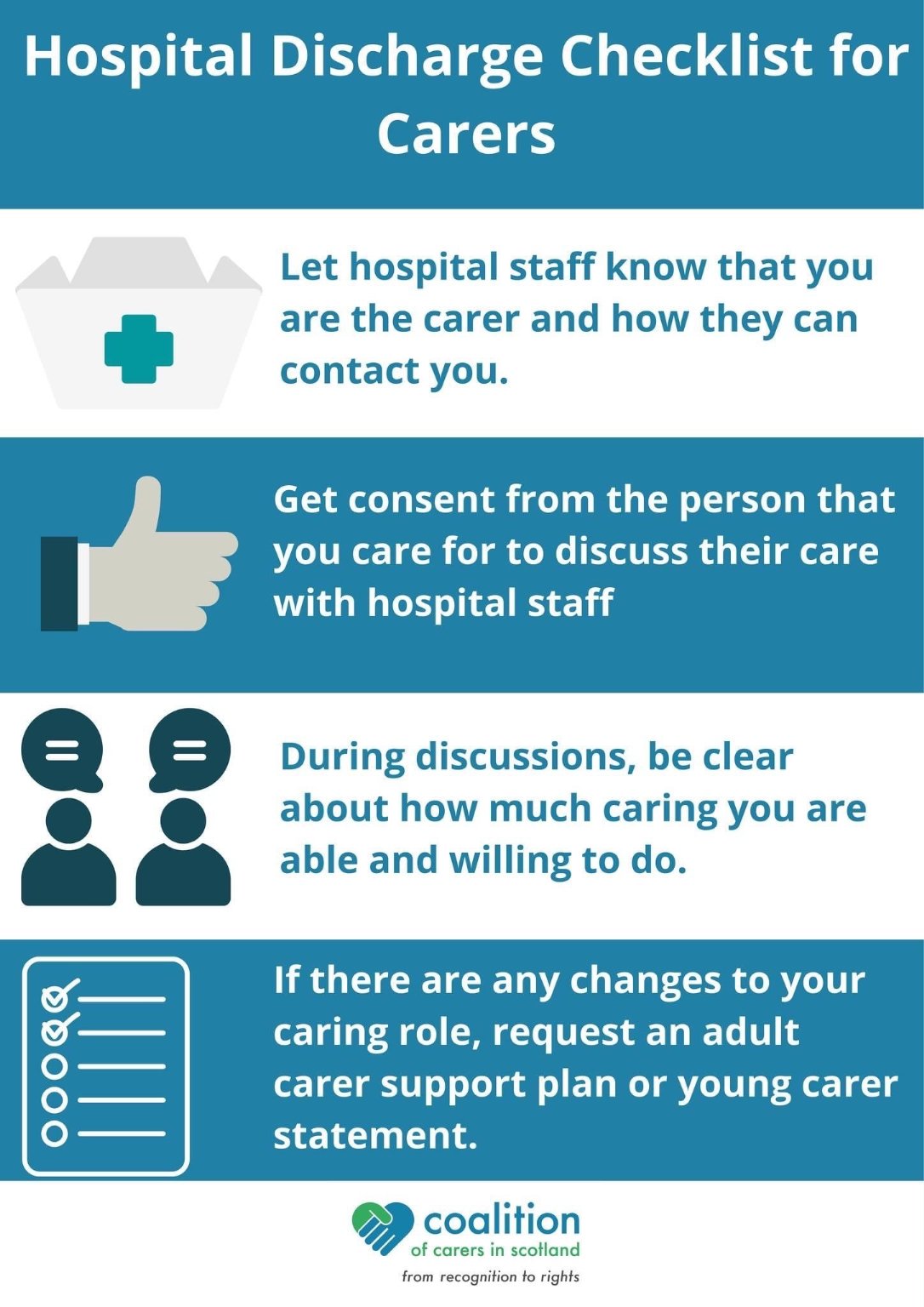
The right to be involved in the hospital discharge process of the person you care for
Carers have a right to be involved in the hospital discharge process of the person they are, or are going to be, caring for. Each health board must ensure that, before a cared for person is discharged from hospital, it involves you in the discharge of the cared for person.
This means:
If the person you are caring for is admitted to hospital, the health board must take appropriate steps to:
*inform you as soon as it can about when the person you care for is to be discharged;
*invite your views about the discharge; and
*take your views into account when planning the discharge (as far as ‘reasonable and practical’).
This can be for either a planned (e.g. routine treatment) or unscheduled admission (e.g. emergency operation) to hospital. This applies where it is likely that you will be providing care after the person you care for has been discharged.
Your involvement in the hospital discharge process must happen whether or not the person you are caring for moves from hospital to their normal home.
Who is responsible?
It is the responsibility of the health board discharging the person you are caring for to involve you in the hospital discharge process. It is important that health and social care professionals begin a conversation with you at the earliest opportunity, so you are able to share knowledge and information. Having early conversations will help to plan for appropriate support to be put in place for you and the person you care for following discharge.
The health board discharging the person you are caring for may not necessarily be the one where they normally live. In these circumstances, the health board in which the cared for person is receiving treatment must involve you in the discharge process.